
From Aarhus to Europe: After huge investment round, Formalize is ready for further scaling
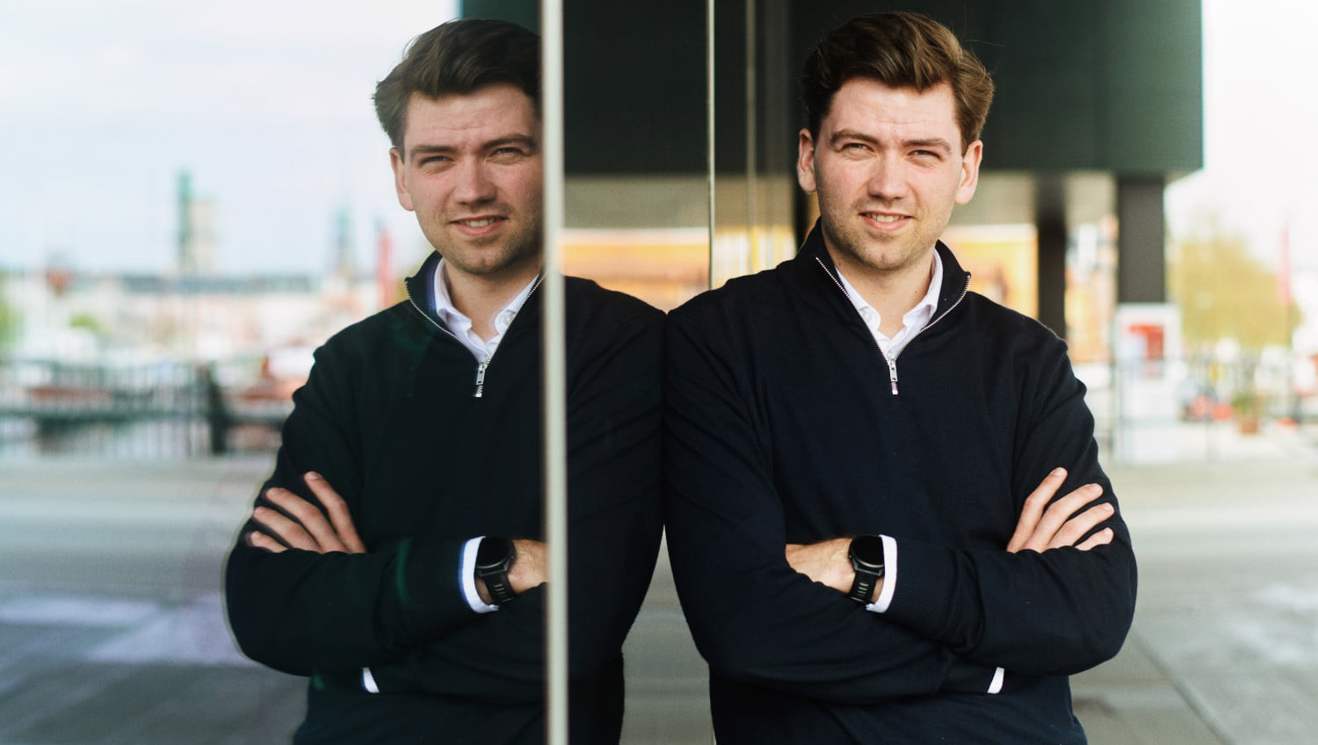
When Formalize landed a Series B investment of DKK 225 million in October, it was one of the largest funding rounds in Danish legaltech ever. But for founder and CEO Jakob Lilholm, the round is not about cementing some kind of status. It’s about keeping up in a market that’s moving faster than ever.
First, the EU’s growing regulatory landscape puts massive pressure on product development. New directives, frequent updates, and increasing documentation and control requirements mean that the Formalize platform must be able to absorb and operationalize complex legislation at a pace that matches Brussels.
“The EU is regulating in a completely new way, and it demands a lot from our product development. We can see that this could be huge, so we need to add more fuel to the fire. Even though our new Formalize product had only been on the market for six months when we started the round, the start was so strong that it was a natural step,” explains Jakob Lilholm.
And secondly, the investment aims to accelerate expansion. In just four years, Formalize has grown from an Aarhus-based startup to a European player with customers in 80 countries. Especially in Central Europe, demand is growing so fast that the company needs a much stronger local presence and more scalable commercial teams than before.
Want to get closer to customers culturally and operationally
The ambition to conquer Europe is not just about putting more flags on a map. It’s about getting closer to customers both culturally and operationally. For Formalize, Germany is a good example: despite the fact that the country is already the company’s largest market with around a quarter of revenue, the company has never had an office there. Until now, that is.
With the Series B round, the first step is to open an office in Munich in the first quarter of 2026. And although modern work culture makes it technically possible to run an international sales organization without local offices, Formalize finds that physical presence still makes a significant difference in the heavy European markets.
“Opening an office is actually the easy part. It’s just finding a location and signing a contract. The hard part is hiring the talented people locally and building credibility in a market where we are just a small Danish company. Customers in Germany and France want to shop locally, and there are more people who speak German in Munich than in Madrid,” says Jakob Lilhom, noting that Formalize has already opened local offices in both Madrid and Milan.
Therefore, the task is as much organizational as commercial: talent attraction, partner building and the ability to create quick results in a market that does not forgive long start-up times.
Boring big business
Built into strategic expansion is a more subtle but equally complex task. How do you ensure that the company does not lose its DNA along the way? For Jakob Lilholm, growth from the outside is often measured in revenue and number of customers, but growth from the inside is also measured in culture, onboarding and well-being.
Formalize has grown from 18 employees to over 170 in two years. This means that more than half of the organization is “new” at any given time and that culture is constantly in play. According to Jakob Lilholm, culture is therefore one of the most critical (and fragile) disciplines in the company.
“Culture is like a house of cards. It can be torn down by a few wrong people, and when you’re growing as fast as we are, it’s mega fragile. If we grow 100 percent, more than half of the people in the company are new,” he says, adding:
“You’re never done with onboarding, something new happens all the time. That’s why we have to actively decide to keep the startup mentality.”
Therefore, Formalize works systematically with training, knowledge sharing and a well-defined identity that can survive geographical distances and organizational complexity. At the same time, Jakob Lilhom is very conscious of his startup mentality.
“There is clearly a phase where trust in each other no longer comes automatically – it has to be decided. When you become many people, you don’t necessarily know each other’s everyday lives, so you have to be very conscious of saying: ‘We choose to have trust.’ If people can feel it, they will also live up to the responsibility. And if someone doesn’t, you have to deal with the individual struggles instead of imposing rules for everyone. Otherwise you just become a big, boring company – and we don’t want to be that.”
Shared ambitions
Formalize has now raised over DKK 375 million in external capital. And with hundreds of millions in venture capitalFuel for startups' rocket ride. Venture capital is pro investors who create pool funds to seek innovation, and to mentor. It is high risk, high reward journeys. More often comes the notion of massive pressure of expectations. But Jakob Lilholm experiences something different. Not because the demands are small, but because the ambitions are shared.
The DKK 225 million Series B round was led by international private equity funds Acton Capital from Germany and BlackFin Tech from France. West Hill Capital and CIBC Innovation also participated in the round.
On the investment side, Formalize has found partners who share the company’s vision and pace, explains Jakob Lilholm. “This means that the pressure of expectation does not come from outside, but from within. The journey is driven by the desire to build something big, global and critical to society and not by the fear of disappointing investors.
“You only feel pressure if there is a difference between others’ expectations and your own. We have investors whose ambitions match ours. The pressure I feel comes mostly from within and from the desire to build something that makes a real difference. Software can be scaled out into the world without logistics and create value for thousands of companies. That’s hugely fascinating to me,” he says.