Experienced founders launch DKK 200 million Nordic AI fund: “AI is not a sidecar, it’s a fucking given”
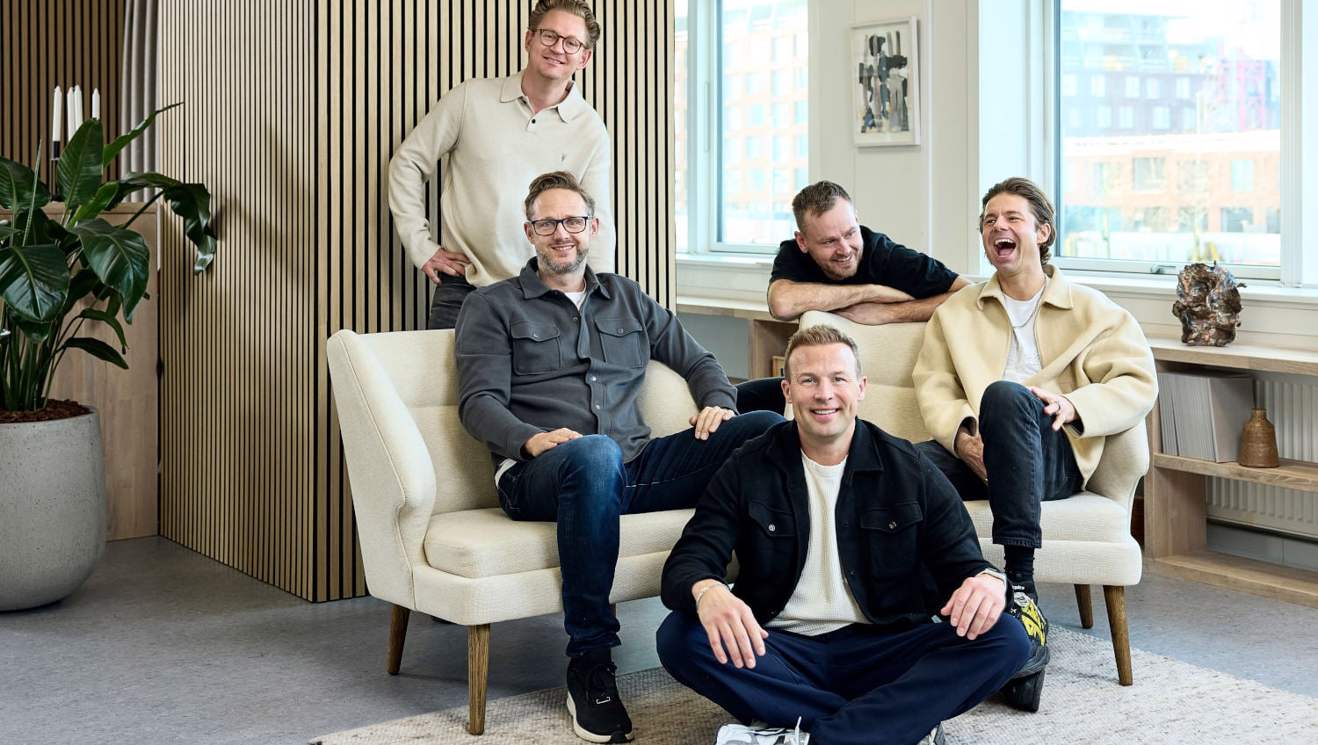
A new venture fund focusing on artificial intelligence is well on its way into Denmark and the Nordic region. Behind the fund is a group of experienced entrepreneurs and investors who have spent the last few years investing as business angels and building their own companies. With True Collective, they will now bring their experience together in a more structured fund that will invest early in AI-driven software startups.
The fund stems from years of angel investments and operational experience in the software and e-commerce industry. As the deal flow grew, it became clear to the partners that the classic angel structure was no longer sufficient. The need for a more formalized structure and larger capital base led to the decision to establish a dedicated venture fund.
For True Collective co-founder Stefan Rosenlund, the journey as an investor began back in 2018, after almost two decades as an entrepreneur and with a billion-dollar exit in his backpack.
“Firstly, it’s been a way for me to give back to where I came from. 2018 I’d been going for 18 years, so it was kind of like time to try and go back a bit. And then there’s the slightly more selfish part of it, which is that I missed that earlier stage. I missed tinkering and I missed the nerdiness,” he says.
According to the partners, the fund is first and foremost created by people who have been at the other end of the table. They don’t see themselves as traditional financial investors, but as operators who invest based on their own experience of building and scaling businesses.
“What makes us uniquely qualified is that we are builders first and investors second in that order,” explains Rolf Pedersen, Managing Partner at True Collective.
This perspective is closely related to the technological shift they believe AI represents. In their view, AI is a structural shift that in many ways resembles the dot.com and the breakthrough of the internet.
“I have the same feeling now as I had 25 years ago when the internet came. It’s crazy what’s coming. And these shifts, it’s every 10 years. And next time, I’ll be too old,” says Stefan Rosenlund with a twinkle in his eye about the motivation for launching the new AI fund.
The ambition is to invest around DKK 200 million and work closely with the founders and contribute with concrete experience from their own companies, rather than just providing capital. This means that the fund wants to position itself as an operator-driven alternative to more traditional venture funds.
A narrow AI thesis
True Collective also has a relatively narrow investment strategy compared to many broader venture funds. The fund will primarily invest in B2B software with a focus on commerce and the many manual processes that still characterize the industry.
The thesis is that much of the work in e-commerce still consists of repetitive, administrative tasks that can be automated with AI. Here, the foundation sees great potential for new software solutions that can streamline workflows and increase profitability.
“We back ambitious founders who kill stupid work in commerce with AI. All the places where people copy-paste, all the places where agentic solutions can kill manual work,” says Rolf Pedersen.
The strategy is largely based on the partners’ own experiences from the industry. Several of them have built companies in commerce and worked to implement automation and AI in their own organizations.
“We don’t just have an investment thesis about something we think might work. We are operators ourselves, doing it every single day with our hands deep in AI,” adds Stefan Rosenlund.
At the same time, the view of AI has changed significantly as the fund has evolved. Where AI was previously seen as an extra layer on top of existing software products, partners now see it as a fundamental requirement.
“AI is not a sidecar, it’s a fucking given. When we look at a company, it’s not a question of is there AI in the product. It has to be completely baked into the organization, but also in the product,” he elaborates.
This means they expect founders to actively work with AI throughout their development setup from product development to internal workflows.
Hands-on venture
A key element of the fund’s strategy is a more active role in the portfolio companies. Where many venture funds position themselves as strategic sparring partners, True Collective takes a much more hands-on approach.
The foundation works with a model where the partners are closely involved in both product development and go-to-market strategy. In practice, this means that they work with the founders to create product roadmaps, pricing strategies and commercial plans.
“If we think a case is exciting, we’re the ones who send a template with how we think you should build an agentic product roadmap. Then we co-create during that period. It’s not just that you leave it with them. We create it together,” says Stefan Rosenlund.
The approach stems from a criticism that several of the partners have encountered in the ecosystem. Venture funds often promise value-add, but in practice have limited time and competence to deliver it.
“My view is that it’s about two things: capacity and competence. You can’t always be a great investor, great at go-to-market, great at product and everything else,” he says.
True Collective seeks to solve this challenge through a circle of partners with complementary skills and a structure where some partners focus on operations and administration, while others concentrate on product and technology.
“One of my most important tasks is to free Stefan and Jesper (Hvejsel, ed.) from all the administrative tasks so they can spend their time where they make the most difference: supporting founders in creating a kickass product,” says Rolf Pedersen.
The fund will also (naturally) use AI in its own operations, including automating reporting and communication with portfolio companies.
Speed and early investments
Part of the foundation’s special starting point is the results that Jesper Hvejsel and Mikkel Salling have created in Firtal Group. In just a few years, they have doubled revenue from around DKK 250 to 500 million, while reducing the number of employees from 82 to 26. According to the partners, efficiency has been achieved through a targeted implementation of AI and automation of as many internal workflows as possible.
The concrete, operational experience of applying AI in an existing business is something the founders themselves emphasize when talking to new startups. Jesper Hvejsel has also become a prominent voice in the debate on AI and organization, and both are active partners in True Collective. The fifth partner in the fund is Sofus Majgaard, who is responsible for operations and transactions.
True Collective will primarily invest in the pre-seed and early seed stage. This means that the fund typically enters when there are the first signs of product-market fit, but before the company has built a fully scalable commercial organization.
“We typically go in pre-seed or early seed when there are some clear signals. Typically, there will already be some initial revenue or some very enthusiastic pilot customers,” explains Rolf Pedersen.
The investments are expected to be in the range of three to seven million DKK.
“We typically write a ticket of somewhere between 3 and 7 million and help them get to the next stepping stone,” he adds.
When selecting startups, the foundation places great emphasis on the founder team. Pace, curiosity and the ability to experiment are key factors. Therefore, the assessment is not only about CV and previous experience, but also about mindset, learning ability and cognitive profiles.
“It’s about the people who sit and build. They have to be walking agents. Otherwise you don’t stand a chance because it’s so fast. It’s not so much the CV. It’s the talent, the way you receive feedback and whether you are a builder by heart,” says Stefan Rosenlund.